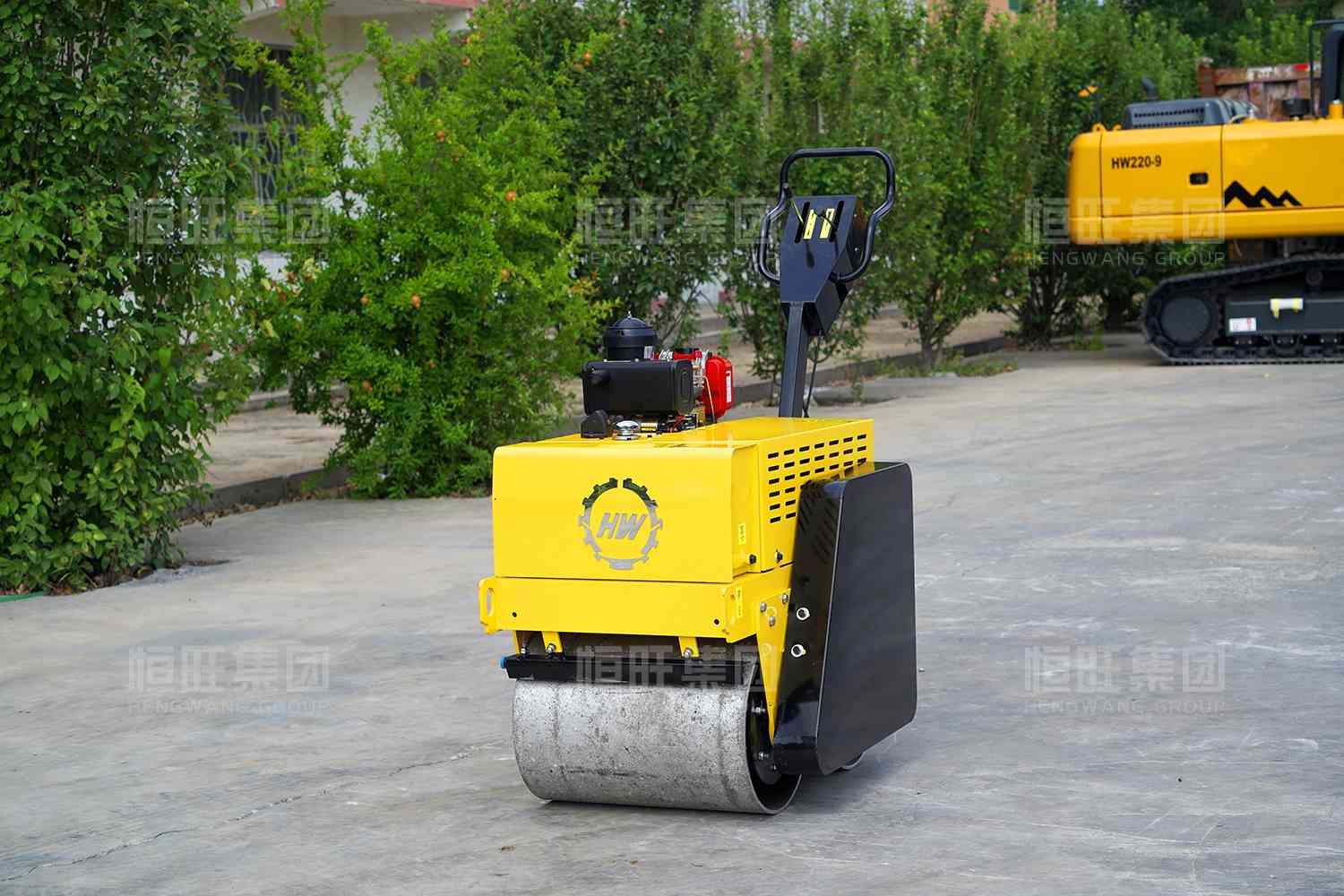
With the construction industry booming, more professionals are adopting walk-behind road rollers. However, improper operation of new machines often causes damage. Mastering scientific operation guidelines is crucial. Below are three essential practices for correctly using new road rollers, helping extend equipment life and enhance construction efficiency.
1. Operational Standards in Place: Follow Protocols to Prevent Damage
Improper operation is a primary cause of road roller failures. New machines must avoid prolonged overload operation. If abnormal smoke or noise occurs during work, stop immediately and reduce load—never operate a "sick" roller. When moving between work sites, follow the "stop-look-slow-move" principle to avoid sudden acceleration or steering.
Key note: Before changing direction, return the shift lever to the neutral position, wait for the road roller to come to a complete stop, then switch gears. Sudden direction changes can damage transmission components. Additionally, road rollers are not recommended for long-distance self-propulsion; use transport vehicles for long-distance transfers to minimize tire and engine wear.
2. Running-in Process in Place: Gradual Break-in for Longevity
Some users overlook the running-in phase for new road rollers, mistakenly thinking 2-3 hours of idle operation suffices or directly using high-speed, high-load operation, which exacerbates component wear. Scientific break-in follows a three-stage rule: start with low speed, low gear, and light load, gradually transitioning to medium speed, mid-gear, and medium load, then to rated conditions.
By increasing load slowly, rough surfaces of components like the engine and gearbox wear in smoothly, forming optimal fit clearances. Following the manufacturer's manual for break-in can extend road roller lifespan by over 20%.
3. Maintenance Practices in Place: Critical Protection in Harsh Environments
Road rollers often work in dusty, muddy conditions, making regular maintenance vital. Daily maintenance should include three checks:
Conclusion
The efficiency and durability of walk-behind road rollers rely on standardized operation, scientific break-in, and meticulous maintenance. Adhering to these "three key practices" minimizes early damage and reduces long-term repair costs. Mastering these points ensures new machines operate at peak performance, supporting construction projects effectively.